

Understanding Preventing Method
Winter brings beautiful snow-covered landscapes and cozy evenings by the fireplace, but it also introduces serious risks to your home’s plumbing system. Frozen pipes represent one of the most common and costly winter emergencies homeowners face across the USA, UK, and Canada. When water inside pipes freezes, it expands with tremendous force that can crack pipes, create leaks, and cause thousands of dollars in water damage. Understanding how to prevent pipes from freezing in winter protects your home from these expensive disasters while ensuring you maintain reliable water access throughout the coldest months. The good news is that preventing frozen pipes requires no specialized plumbing knowledge, just awareness of vulnerable areas and commitment to implementing proven protective measures.
Many homeowners only think about frozen pipes after experiencing a problem, but proactive winterization offers far better results than reactive repairs. The damage from a single burst pipe can exceed the cost of comprehensive prevention measures by hundreds or thousands of dollars. Beyond financial considerations, burst pipes create enormous inconvenience through water service interruptions, emergency repairs, and displacement during restoration work. Taking time before winter arrives to protect your plumbing system saves money, stress, and hassle while providing peace of mind during severe cold snaps that test your home’s defenses.
Why Pipes Freeze and Where It Happens Most
Water freezes at thirty-two degrees Fahrenheit or zero degrees Celsius, but pipes typically do not freeze until temperatures drop below twenty degrees Fahrenheit for extended periods. The freezing process begins when cold air removes heat from pipes faster than water flowing through them can replace it. Stagnant water in pipes freezes more quickly than moving water, which explains why rarely used fixtures face higher risk. As ice forms inside a pipe, it creates a blockage that prevents water from flowing. The expanding ice exerts pressure that can reach thousands of pounds per square inch, eventually cracking even metal pipes.
Certain locations in your home face significantly higher freezing risk than others. Pipes running through unheated areas like basements, crawl spaces, attics, and garages lack the warmth from living spaces that protects interior plumbing. Exterior walls contain pipes closer to cold outdoor temperatures with less insulation protecting them. Kitchen and bathroom sinks on outside walls represent particularly vulnerable fixtures. Outdoor faucets, hose connections, and sprinkler systems experience direct exposure to freezing temperatures without any shelter.
Homes in regions that rarely experience severe cold face greater risk because construction standards may not include the same freeze protection common in consistently cold climates. A home built in a typically mild area might have pipes in exterior walls without adequate insulation or heat. Homeowners in these regions may lack experience with winterization, leaving pipes vulnerable during unexpected cold snaps. Even in cold-weather regions, older homes might have outdated plumbing configurations or deteriorated insulation that increases freezing risk compared to modern construction.
Understanding these vulnerability factors helps you prioritize prevention efforts. Learning how to prevent pipes from freezing in winter starts with identifying which pipes in your specific home face the greatest risk based on their location, exposure, and usage patterns. Walk through your home noting pipes in unheated spaces, along exterior walls, or serving outdoor fixtures. These are the areas requiring your closest attention and most thorough protection.
Insulating Vulnerable Pipes Throughout Your Home
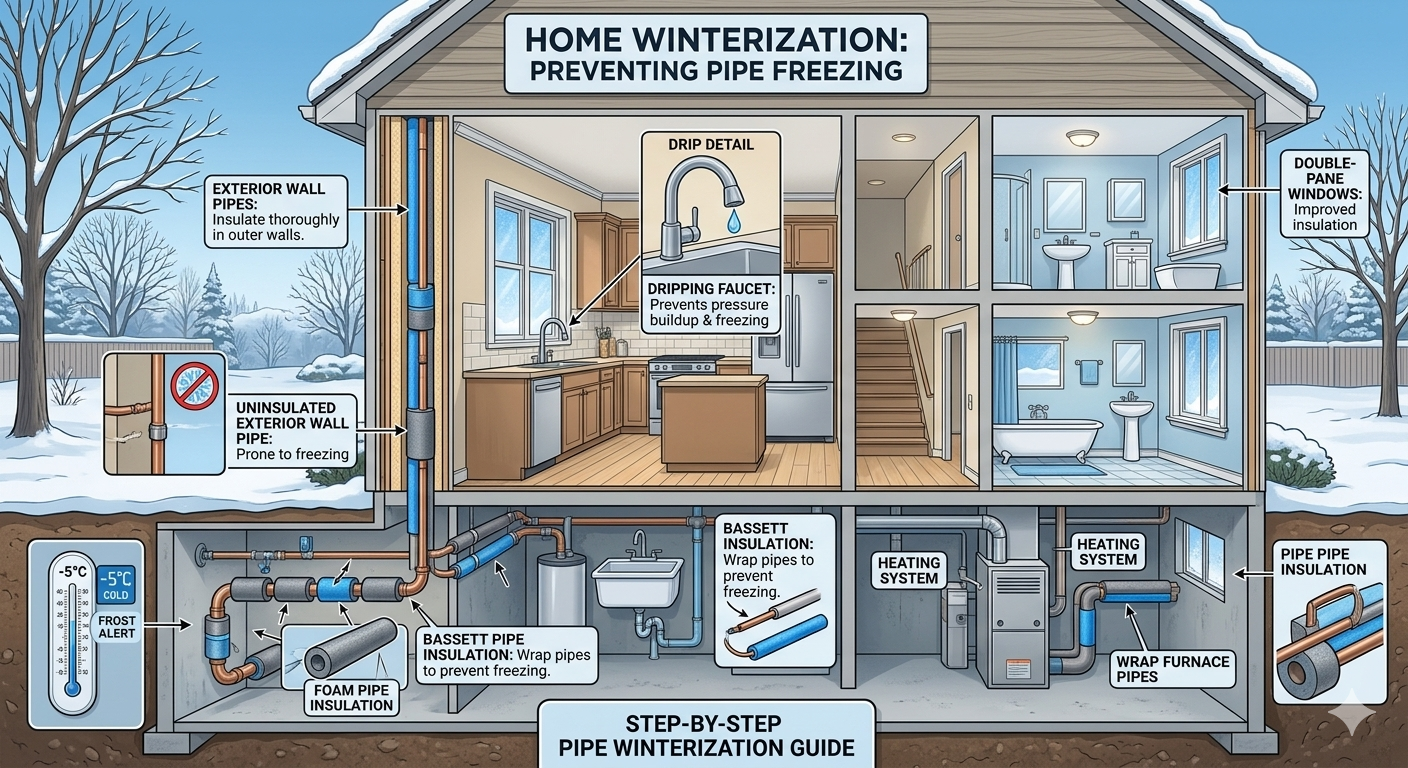
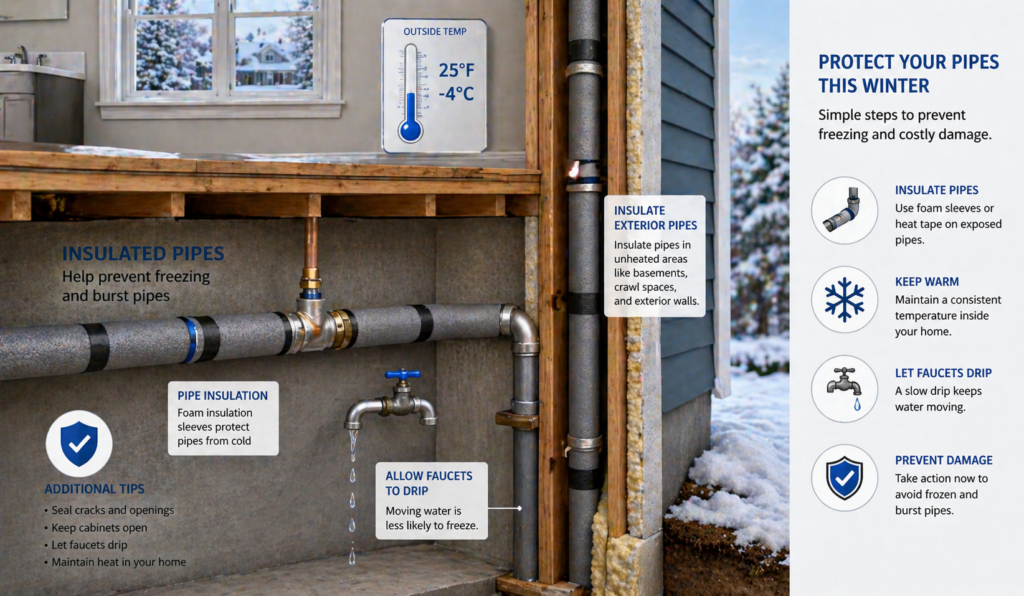
Pipe insulation provides the first line of defense against freezing by creating a barrier that slows heat loss from water to cold air. Various insulation products suit different pipe types and locations, making this protection accessible for any budget and skill level. Foam pipe sleeves represent the most common and affordable option, available at hardware stores in sizes matching standard pipe diameters. These tubes slip over pipes and seal with tape, creating an insulating layer that significantly reduces freezing risk. Installation requires no tools beyond scissors or a utility knife to cut foam to length.
Fiberglass pipe wrap offers flexible insulation suitable for pipes with irregular shapes, tight spaces, or numerous fittings where rigid foam sleeves prove difficult to install. You wrap this material around pipes and secure it with tape, creating customizable protection that conforms to any configuration. Heat tape or heat cable provides active protection for extremely vulnerable pipes by generating warmth that prevents freezing even during severe cold. These electrical heating elements wrap around pipes and plug into standard outlets, maintaining temperatures above freezing automatically.
Focus insulation efforts on pipes in unheated areas first, as these face the greatest risk. Basement and crawl space pipes typically need comprehensive insulation, especially those running along exterior walls or near foundation vents. Attic pipes require insulation since attic temperatures often match outdoor conditions. Garage pipes need protection because most garages lack heating. Do not forget pipes inside cabinets on exterior walls, particularly under kitchen and bathroom sinks where cold air can reach plumbing through gaps around pipes penetrating walls.
Outdoor faucets and hose connections require special attention when learning how to prevent pipes from freezing in winter. Disconnect garden hoses before winter since water trapped in connected hoses can freeze back into pipes. Install insulated faucet covers that create protective pockets of dead air around outdoor spigots. For maximum protection, shut off interior valves supplying outdoor faucets if your plumbing includes them, then open outdoor faucets to drain remaining water. This eliminates water that could freeze and damage pipes.
Maintaining Adequate Heat in Vulnerable Areas
Keeping areas containing pipes above freezing represents another effective strategy for preventing frozen plumbing. Basements and crawl spaces often lack heating, allowing temperatures to drop dangerously low during cold weather. Opening basement doors or installing heating vents that direct warm air into these spaces helps maintain temperatures above freezing. Portable space heaters provide targeted warmth in particularly cold areas, though you must follow safety guidelines to prevent fire hazards. Never leave space heaters unattended and keep them away from flammable materials.
Cabinet doors under sinks on exterior walls should remain open during extreme cold to allow heated room air to circulate around pipes. This simple step costs nothing and can prevent freezing in vulnerable kitchen and bathroom plumbing. The slight inconvenience of open cabinet doors during cold snaps is vastly preferable to dealing with frozen or burst pipes. If you have small children or pets, ensure no dangerous cleaning products or chemicals become accessible when opening cabinets.
Thermostat settings significantly impact freeze prevention throughout your home. Maintaining consistent temperatures rather than dramatic setbacks at night or when away keeps pipes warmer. While lowering heat to save energy makes sense normally, during severe cold weather the risk of frozen pipes outweighs modest energy savings. Set your thermostat no lower than fifty-five degrees Fahrenheit even when leaving home for extended periods during winter. This minimum temperature provides sufficient warmth to protect plumbing while still reducing heating costs compared to normal occupied temperatures.
Garage doors should remain closed during cold weather to retain whatever heat exists and shield pipes from wind chill. Many garages contain water heaters, washing machines, or utility sinks with exposed plumbing vulnerable to freezing. Keeping garage doors closed creates a buffer zone between harsh outdoor conditions and these fixtures. If your garage lacks insulation, consider adding it to exterior walls and the garage door itself for additional protection.
Keeping Water Moving Through Your Pipes
Running water through pipes, even at a trickle, significantly reduces freezing risk because moving water has difficulty forming ice crystals. The friction from flowing water generates slight heat while preventing the stagnant conditions that allow freezing to begin. During extreme cold weather when temperatures drop well below freezing, allowing faucets to drip provides cheap insurance against frozen pipes. This technique works best for fixtures on exterior walls or those supplied by particularly vulnerable pipes.
You only need a very slight flow to achieve protection, so the water waste and cost remain minimal compared to frozen pipe damage. A drip rate of five drops per minute provides sufficient movement to prevent freezing in most situations. Both hot and cold water taps should drip if the fixture has separate controls, as this keeps water moving through both supply lines. For single-handle faucets, position the handle to draw from both hot and cold supplies simultaneously.
Opening faucet valves during extremely cold weather also relieves pressure if freezing does occur. When ice forms in pipes, it creates blockages that trap water between the ice and closed faucets. This trapped water experiences enormous pressure as more ice forms and expands. An open faucet provides a pressure relief valve that allows water to escape rather than building pressure that cracks pipes. Even if a section of pipe freezes, the open faucet reduces the likelihood of that freeze causing a burst.
Strategic water usage during cold snaps keeps plumbing active and warm. Running washing machines, dishwashers, and taking showers circulates heated water throughout your plumbing system. The heat from this water warms pipes and surrounding areas, raising temperatures above freezing levels. Obviously you should not waste water unnecessarily, but normal household water use during cold weather provides beneficial warming effects. Spacing these activities throughout the day rather than concentrating them maintains more consistent pipe temperatures.
Sealing Gaps and Cracks That Expose Pipes to Cold
Air leaks allow frigid outdoor air to reach pipes, dramatically increasing freezing risk. Learning how to prevent pipes from freezing in winter includes identifying and sealing gaps where cold air infiltrates your home. Examine areas where pipes penetrate walls, floors, or foundations for gaps around the pipes. These penetrations often lack adequate sealing, creating direct pathways for cold air. Caulk or expanding foam sealant closes these gaps effectively, blocking cold air while allowing pipes to pass through.
Foundation vents in crawl spaces regulate moisture during warm months but allow cold air to circulate around pipes during winter. Many building codes require these vents, but temporary winter covers reduce cold air infiltration while maintaining enough ventilation to prevent moisture problems. Special vent covers designed for this purpose allow easy installation and removal. Never permanently seal foundation vents as this creates moisture accumulation and potential structural damage, but seasonal covers provide valuable freeze protection.
Rim joists where floor systems meet foundation walls represent another common source of cold air infiltration that threatens pipes. These areas often lack adequate insulation, allowing outdoor temperatures to affect basement spaces. Adding insulation to rim joists creates a thermal barrier that protects nearby pipes. Fiberglass batts or rigid foam insulation work well for this application, though proper installation matters significantly for effectiveness.
Windows and doors with poor seals or damaged weatherstripping allow cold drafts that can affect nearby pipes. Replacing worn weatherstripping and adding door sweeps blocks these air leaks. Window insulation film creates an additional barrier against cold while improving overall home energy efficiency. While these measures benefit your entire home, they provide particular value for pipes running near these openings.
Special Considerations for Vacation Homes and Absences
Homes left unoccupied during winter face extreme frozen pipe risk because problems go unnoticed until returning owners discover the aftermath. If you plan to leave your home vacant during cold weather, comprehensive winterization becomes essential. The safest approach involves draining your plumbing system entirely by shutting off the main water supply and opening all faucets to remove water from pipes. Pour non-toxic antifreeze rated for plumbing systems into drain traps to prevent freezing in P-traps under sinks and toilets.
If draining the system seems too complex or you need to maintain some water service for security systems or heating equipment, alternative approaches reduce risk. Set your thermostat to maintain at least fifty-five degrees throughout your absence, ensuring adequate warmth reaches all areas containing pipes. Ask a neighbor or friend to check your home regularly during your absence, ideally daily during severe cold weather. Provide them with emergency contact information and permission to take action if they discover problems.
Shut off and drain water heaters if leaving for extended periods, as this eliminates a significant volume of water that could freeze and damage the tank. For shorter absences when maintaining heat, leaving the water heater operational makes sense. Open cabinet doors under sinks and interior doors throughout the house to promote air circulation and even temperatures. This ensures heated air reaches vulnerable plumbing rather than creating cold pockets where pipes might freeze.
Consider installing a smart home monitoring system that alerts you to temperature drops inside your home. These systems send notifications to your phone if temperatures fall below thresholds you set, allowing you to contact someone to investigate before pipes freeze. Some systems include water leak sensors that detect flooding from burst pipes, enabling faster response even if you cannot prevent the initial freeze. This technology provides valuable peace of mind for vacation homes or during winter travel.
Recognizing Early Warning Signs of Freezing Pipes
Learning how to prevent pipes from freezing in winter includes recognizing warning signs that indicate problems developing. Catching these signs early allows intervention before pipes actually freeze or burst. Reduced water flow from faucets during cold weather suggests ice formation partially blocking pipes. If you turn on a faucet and only a trickle emerges, ice may be restricting flow even if pipes have not yet frozen solid. This situation requires immediate attention to prevent complete freezing.
Frost visible on exposed pipes clearly indicates dangerous temperatures affecting your plumbing. Any pipe cold enough to develop exterior frost is certainly at risk of internal freezing. Check exposed pipes in basements, crawl spaces, and attics during severe cold for frost formation. Discovering frost provides an opportunity to add heat or insulation before freezing causes damage.
Strange sounds from your plumbing system can signal freeze-related issues. Clanking, banging, or gurgling noises might indicate ice formation creating blockages that disrupt normal water flow. Air trapped by ice blockages can cause these sounds as pressure fluctuates. Unusual plumbing noises during cold weather warrant investigation to identify and address potential freezing.
Unpleasant odors from drains sometimes indicate frozen pipes blocking proper drainage and allowing sewer gases to back up into your home. If you notice sewage smells during cold weather, check whether drains are flowing properly. Slow or stopped drains combined with odors suggest blockages that might result from freezing.
Emergency Response When Pipes Do Freeze
Despite best prevention efforts, pipes occasionally freeze during extreme weather or due to overlooked vulnerabilities. Knowing how to respond quickly minimizes damage when freezing occurs. If you turn on a faucet and no water comes out during cold weather, assume the pipe has frozen. Keep the faucet open because this allows water to flow once you thaw the pipe and helps relieve pressure from expanding ice.
Locate the frozen section by feeling along exposed pipes for extremely cold areas or visible frost. The freeze typically occurs in pipes running through unheated spaces or along exterior walls. Once located, apply gentle heat to thaw the pipe gradually. Never use open flames, torches, or other high-heat sources that can damage pipes or create fire hazards. Safe heating methods include hair dryers, heat lamps, or hot towels wrapped around the frozen section.
Start heating pipes nearest the faucet and work backward toward the frozen section. This allows melting ice to escape through the open faucet rather than building pressure. Thawing from the middle of a frozen section can trap water between ice blockages, creating dangerous pressure. Patience matters during thawing as rushing the process with excessive heat causes more problems than it solves.
If you cannot locate the frozen pipe, cannot access it, or feel uncomfortable attempting to thaw it yourself, call a licensed plumber immediately. Professional plumbers have specialized equipment including pipe thawing machines that safely restore water flow without damage. The cost of professional service far exceeds the expense of burst pipes and water damage from improper thawing attempts. Understanding how to prevent pipes from freezing in winter includes knowing when to seek expert help.
Long-Term Solutions and Home Improvements
Chronic frozen pipe problems indicate the need for permanent solutions beyond seasonal winterization measures. Relocating pipes from vulnerable locations to protected interior spaces eliminates freeze risk entirely. While this represents a significant plumbing project requiring professional installation, it permanently solves recurring problems. Moving pipes from exterior walls to interior walls or from unheated crawl spaces to heated basements provides lasting protection.
Adding insulation to walls, floors, and ceilings surrounding vulnerable pipes improves their protection during cold weather. Blown-in insulation fills wall cavities containing pipes without requiring wall removal. Basement ceiling insulation protects pipes running through floor joists from cold crawl space air. Attic floor insulation shields pipes from extreme attic temperatures. These insulation improvements also enhance overall home energy efficiency, providing year-round benefits beyond freeze prevention.
Upgrading to modern plumbing materials in freeze-prone areas offers additional resilience. PEX plumbing tubing expands slightly when frozen without bursting as readily as rigid copper or PVC pipes. While no pipe is completely freeze-proof, PEX provides more forgiveness during freeze-thaw cycles. Replacing vulnerable sections with PEX during renovations reduces future freeze damage risk.
Installing frost-free hose bibs replaces standard outdoor faucets with specially designed fixtures that shut off water inside heated spaces rather than at the exterior wall. These devices place the valve mechanism where it remains warm while allowing water to drain from the exposed section each time you close the valve. Frost-free hose bibs virtually eliminate freezing risk for outdoor faucets, making them excellent upgrades for homes in cold climates.
Regional Considerations Across USA, UK, and Canada
Climate variations across the USA, UK, and Canada create different freeze prevention priorities. Northern regions with consistently cold winters require comprehensive winterization as standard practice. Homes in these areas typically include better insulation, heat tape on vulnerable pipes, and construction practices that minimize freeze risk. Residents develop routines around winter preparation and remain vigilant throughout cold months. The main challenge involves complacency from assuming standard construction provides adequate protection without supplemental measures during extreme cold.
Southern regions of the USA and milder areas of the UK face different challenges because infrequent freezes catch people unprepared. Homes in these regions often lack the insulation and heating capacity needed during rare but severe cold snaps. Residents may not recognize freeze risks or know prevention techniques. These occasional freeze events often cause disproportionate damage because both construction and homeowner preparedness fall short. Learning how to prevent pipes from freezing in winter matters especially in these areas where single freeze events cause widespread damage.
Canada’s severe winters demand rigorous freeze prevention, particularly in prairie provinces and northern territories experiencing prolonged extreme cold. Many Canadian homes include heated basements, extensive pipe insulation, and other protective features as standard construction. However, even in cold-adapted regions, poorly maintained heating systems or inadequate insulation in older homes create vulnerabilities. Power outages during winter storms pose additional risks by eliminating heating, requiring backup plans to protect plumbing during extended outages.
Coastal areas in all three countries benefit from moderating ocean influences but still experience periodic freezes requiring protection. Marine climates rarely see extreme cold but occasionally drop below freezing, creating risks for unprepared homes. High humidity in coastal regions can actually increase freeze damage because moisture in walls and insulation reduces their protective value and allows cold penetration to pipes.
FAQs
At what temperature should I start worrying about frozen pipes?
Begin implementing freeze prevention measures when outdoor temperatures are forecast to drop below twenty degrees Fahrenheit for several hours or when temperatures remain below freezing for extended periods. Pipes can freeze at these temperatures, especially those in unheated spaces or along exterior walls. Start protective actions before temperatures reach these levels rather than waiting until a freeze occurs.
Should I let all my faucets drip during cold weather?
You do not need to run all faucets, only those most vulnerable to freezing. Focus on fixtures on exterior walls, in unheated spaces, or that have frozen previously. A slight drip from these vulnerable faucets provides adequate protection without excessive water waste. Interior plumbing in heated spaces typically does not require dripping unless temperatures inside your home drop dangerously low.
Can I use a space heater in my crawl space to prevent frozen pipes?
Yes, space heaters can protect pipes in crawl spaces when used properly with essential safety precautions. Use only heaters rated for the space size, never leave them unattended, keep them away from flammable materials, and ensure adequate ventilation. Electric heaters designed for these applications work better than combustion heaters that create carbon monoxide risks in enclosed spaces.
What is the best insulation for exposed pipes in my basement?
Foam pipe sleeves provide excellent insulation for straight pipe runs and are easy to install without special tools. For pipes with many fittings or irregular configurations, fiberglass pipe wrap offers more flexibility. For extremely cold locations or pipes that have frozen previously, heat tape or cable combined with insulation provides the highest level of protection.
Will turning off my water prevent pipes from bursting if I leave for winter?
Shutting off the main water supply and draining all pipes provides the best protection for vacant homes during winter. Water cannot freeze and burst pipes if no water remains in the system. You must also drain the water heater, add antifreeze to drain traps, and ensure all faucets and fixtures are opened to fully drain the system. This comprehensive approach prevents freeze damage even during severe cold without heat.
Conclusion
Understanding how to prevent pipes from freezing in winter empowers homeowners across the USA, UK, and Canada to protect their properties from one of the most common and costly cold-weather disasters. The combination of proper insulation, adequate heating, strategic water flow, and thorough weatherization creates multiple layers of defense that keep plumbing functional even during severe cold snaps. Prevention costs a fraction of the expense required to repair burst pipes and remediate water damage, making winterization efforts exceptionally cost-effective investments. Beyond financial considerations, protecting your pipes ensures reliable water access throughout winter and eliminates the stress and disruption that plumbing emergencies create. The techniques described require no specialized skills, just awareness of vulnerable areas and commitment to implementing protective measures before winter arrives. Starting with simple steps like insulating exposed pipes, maintaining adequate heat, and sealing air leaks provides immediate improvement, while long-term solutions like relocating vulnerable pipes or upgrading to frost-free fixtures offer permanent protection. Regional climate variations mean freeze risks differ across North America and the UK, but the fundamental principles of prevention apply universally regardless of location. Whether you live in a region with harsh winters requiring comprehensive protection or a milder area where occasional freezes catch people unprepared, understanding these prevention strategies protects your home and peace of mind. Take action before the next cold snap arrives by walking through your home, identifying vulnerable pipes, and implementing appropriate protection based on your specific situation and climate. The time invested in prevention pays enormous dividends through avoided damage, maintained comfort, and the confidence that comes from knowing your home stands ready to weather whatever winter brings. Remember that frozen pipe prevention represents ongoing wintertime vigilance rather than a one-time task, requiring attention throughout cold months and adjustment based on weather severity. By making freeze prevention part of your regular winter routine, you join countless homeowners who successfully protect their plumbing year after year, avoiding the expensive lessons that frozen pipes teach those who neglect these essential precautions.